Flywheel Peak Shaving for High Power Tower Cranes

- LocationAmersfoort
- DateJanuary 2025
- Tower Cranes1
Smaller 65 kW cranes have been measured and peak shaved before, but multiple projects today use bigger 110 kW cranes for taller and heavier lifts. This raises an important question for site planners and energy managers: What does the actual power profile of a 110 kW tower crane look like and can a Flywheel Energy Storage System (FESS) handle these higher peaks effectively?
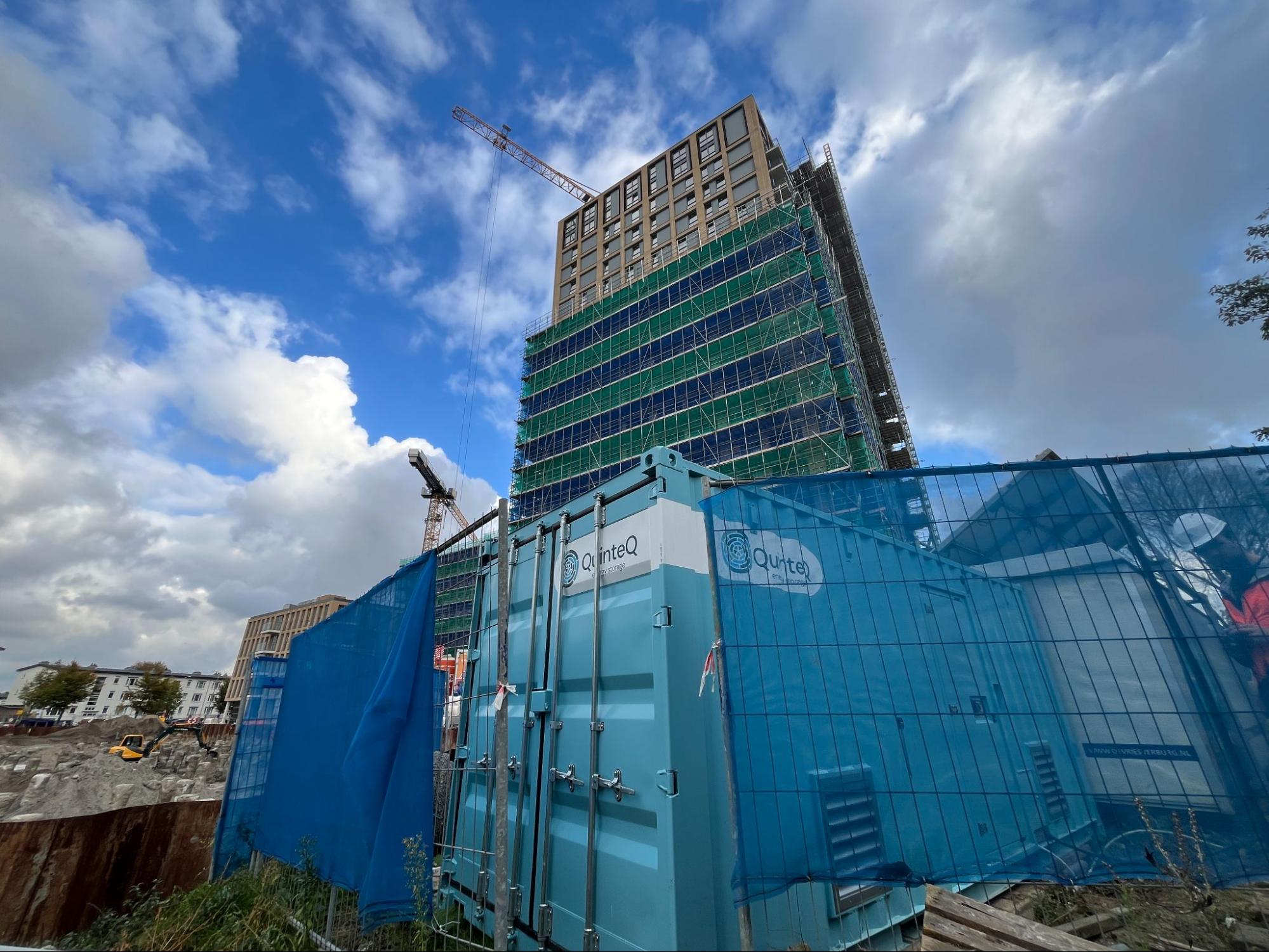
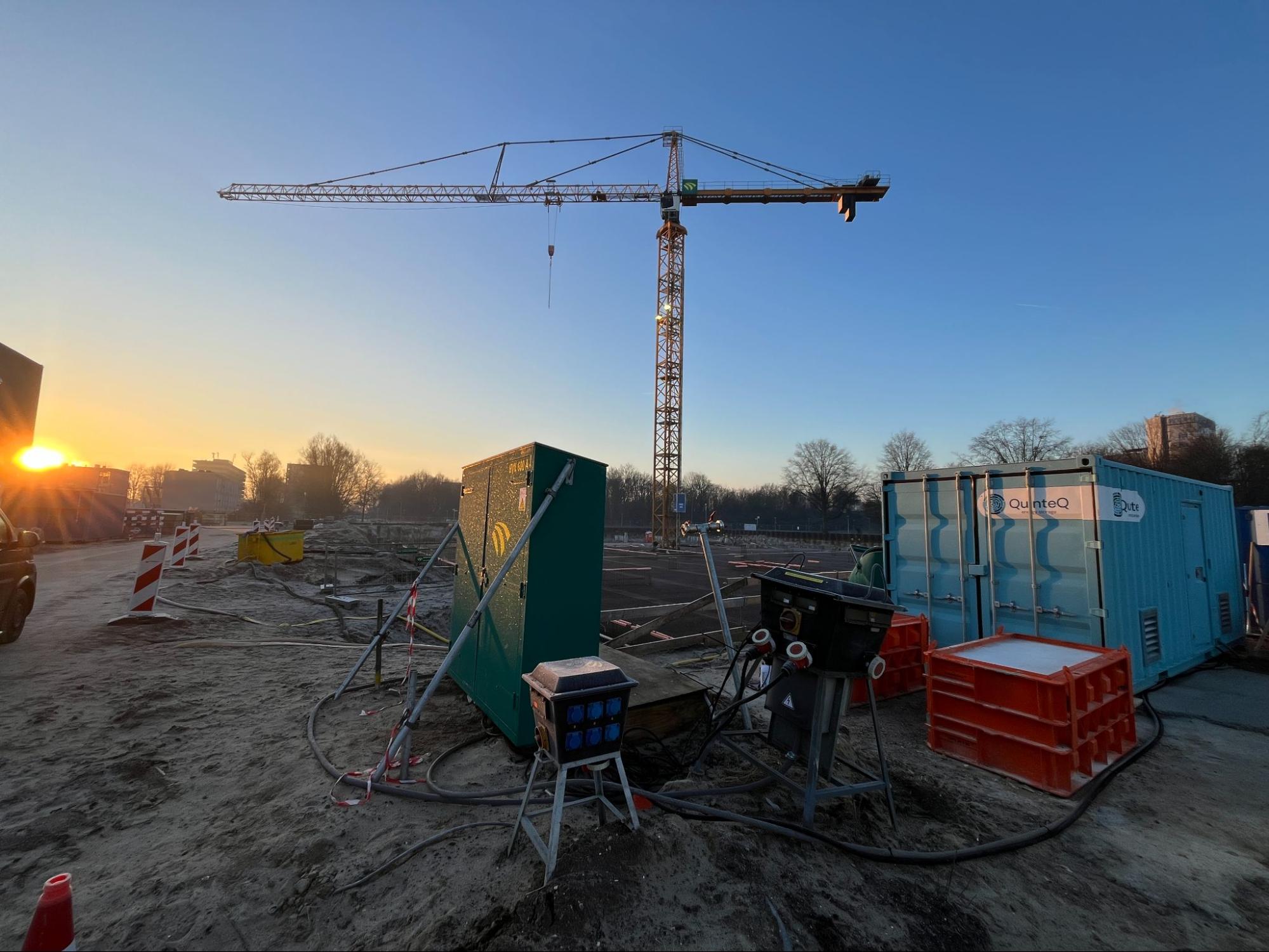
We set out to answer these questions, deploying a project at a live construction site in Amersfoort, which was the only site operating a 110 kW tower crane. To gain practical experience, we also ran an additional demonstration with a 65 kW crane at a site in Diemen for comparison.
The data showed:
- The 110 kW tower crane’s peaks required up to 0.6 kWh per hoist movement, which was lower than initially expected.
- By comparison, the Diemen site with a 65 kW crane showed ~0.3 kWh per peak.
- Other recent measurements confirm that height is a key factor: for example, at VolkerWessels in Eindhoven (Link to Use Case), peak energy needs reached 2 kWh per lift due to the crane’s great working height.
What We Learned from the 110 kW Crane Tests
The data showed that peak shaving is absolutely possible with high power tower cranes. The connection size dropped from 125 kW (190 A) down to just 30 kW (40 A) when using the flywheel.
- The flywheel’s 4 kWh capacity remains sufficient, even for these larger cranes.
- Even though each peak draws more energy than smaller cranes, the system easily covers typical lifting operations.
- Reducing the connection size from a large-user connection to a small-user connection delivers significant cost savings, especially in areas with grid capacity constraints.
This use case shows that even larger tower cranes can benefit from flywheel peak shaving, helping sites avoid oversized grid connections, expensive generator setups, and unnecessary fuel use.
By covering short, intense power peaks, the flywheel allows contractors to downsize to a standard connection, cut carbon emissions, and keep projects running smoothly, even in areas where grid availability is tight. It also means more predictable operating costs and fewer delays waiting for grid upgrades, a real competitive advantage for modern, flexible construction sites.